The digital discovery landscape has permanently shifted. Users no longer want to click through pop-ups, SEO-bloated paragraphs, and ten blue links to find one answer. They increasingly expect AI-generated search results to synthesize facts instantly.
To rank inside ChatGPT Search, Google AI Overviews, Perplexity, and other answer engines, content needs more than keyword targeting. It must be structured for semantic clarity, factual density, and machine extractability. Start with the wider AI Search guide, then use Generative Engine Optimization principles to engineer your website for citations.
Rankings are no longer enough. Your content must be easy for AI to cite.
AI models do not reward clever metaphors or padded introductions. They reward clear facts, structured relationships, entity trust, and content chunks that can survive extraction without losing meaning.
1. Ditch the fluff and maximize factual density
Traditional SEO often rewarded long introductions, keyword repetition, and narrative padding. AI search works differently. If your content is diluted with adjectives, marketing spin, and redundant consensus knowledge, its information gain becomes weak and the model can choose a more concise competitor.
Use atomic paragraphs
Keep paragraphs to one to three sentences. Every paragraph should include a verifiable fact, metric, entity, or clear claim.
Publish original data
AI engines prefer sources that add new information: benchmarks, survey results, expert quotes, and product-specific proof.
Audit density before publishing
Use the Word Count Tool to inspect length, paragraph density, and whether the article is bloated before it goes live.
Strategic insight
AI models are risk-averse. If an engine cannot verify your claims, or if the useful facts are buried under linguistic noise, it will reduce confidence and cite a clearer source.
2. Adopt BLUF architecture for AI extraction
AI retrieval systems work in discrete chunks. If your best insight depends on three earlier paragraphs for context, the model may misinterpret it or skip it. The fix is BLUF: Bottom Line Up Front. Each H2 or H3 section should begin with a 40-to-60 word answer that directly resolves the user’s implied question.
Write direct answers first
Start each major section with a standalone summary. Then add data, examples, nuance, and context after the answer.
Pass the Island Test
If one paragraph was extracted and shown alone, it should still make sense. Replace vague pronouns like “this” with specific entities and outcomes.
Format for answer engines
BLUF is part of Answer Engine Optimization. Use the AEO Guide to align headings, FAQs, and answer blocks with how AI systems retrieve content.
Critical warning
Avoid complex nested HTML for simple text. AI crawlers struggle with “div soup,” so keep publishing markup semantic: article, section, h2, table, p, and list. For more examples, review the AI-friendly content formatting guide.
3. Use HTML tables for comparative data
Large Language Models are strong at processing structured data. When users ask AI to compare software platforms, analyze pricing tiers, or list specifications, the system looks for unambiguous relationships between data points.
| Optimization Vector | Traditional SEO Approach | AI Search / GEO Approach |
|---|---|---|
| Content Structure | Long-form, narrative-driven articles. | Modular, BLUF-led sections with extractable facts. |
| Primary Metric | Organic clicks and keyword rank. | Citation share and Share of Model. |
| Technical Focus | Page speed and backlink volume. | Token efficiency, schema density, and crawl clarity. |
| Data Presentation | Human-readable HTML blocks. | Machine-readable tables and Markdown mirrors. |
4. Define your brand with schema maximalism
In the blue-link era, schema markup was often treated as a rich-snippet add-on. In AI search, schema becomes the blueprint of your digital identity. Structured data tells the model who you are, what you sell, who authored the page, and why the source is authoritative.
Build the identity layer
Use Organization, Person, Product, Article, and FAQPage schema across your core pages.
Create corroboration
Use sameAs links to connect your brand to verified profiles and trusted third-party sources.
Automate structured data
Use the Schema Generator to build valid JSON-LD, then learn the basics in the JSON-LD schema glossary.
5. Optimize token efficiency with llms.txt
Standard website HTML is noisy. Navigation, tracking scripts, pop-ups, CSS, and unrelated template content create a token tax for AI crawlers. If it costs too much computational effort to parse your site, the model may retrieve a cleaner competitor.
Point AI bots to your most important content, product pages, documentation, and localized resources.
Serve clean Markdown versions so models process the highest-signal version of your knowledge base.
Reduce token waste and help AI systems index accurate facts with fewer distractions.
You can create this roadmap with the llms.txt Generator. For a deeper implementation walkthrough, read the llms.txt guide.
6. Prevent semantic drift in multilingual GEO
For global brands, AI search introduces a severe risk: semantic drift. If translated pages rely on literal word-swapping, they may lack local nuance, regional examples, cultural context, and search intent alignment. AI engines detect that low semantic confidence and may refuse to cite the page in that market.
Transcreation over translation
Adapt idioms, local compliance details, pricing expectations, and regional statistics so each language version has genuine information gain.
Technical parity
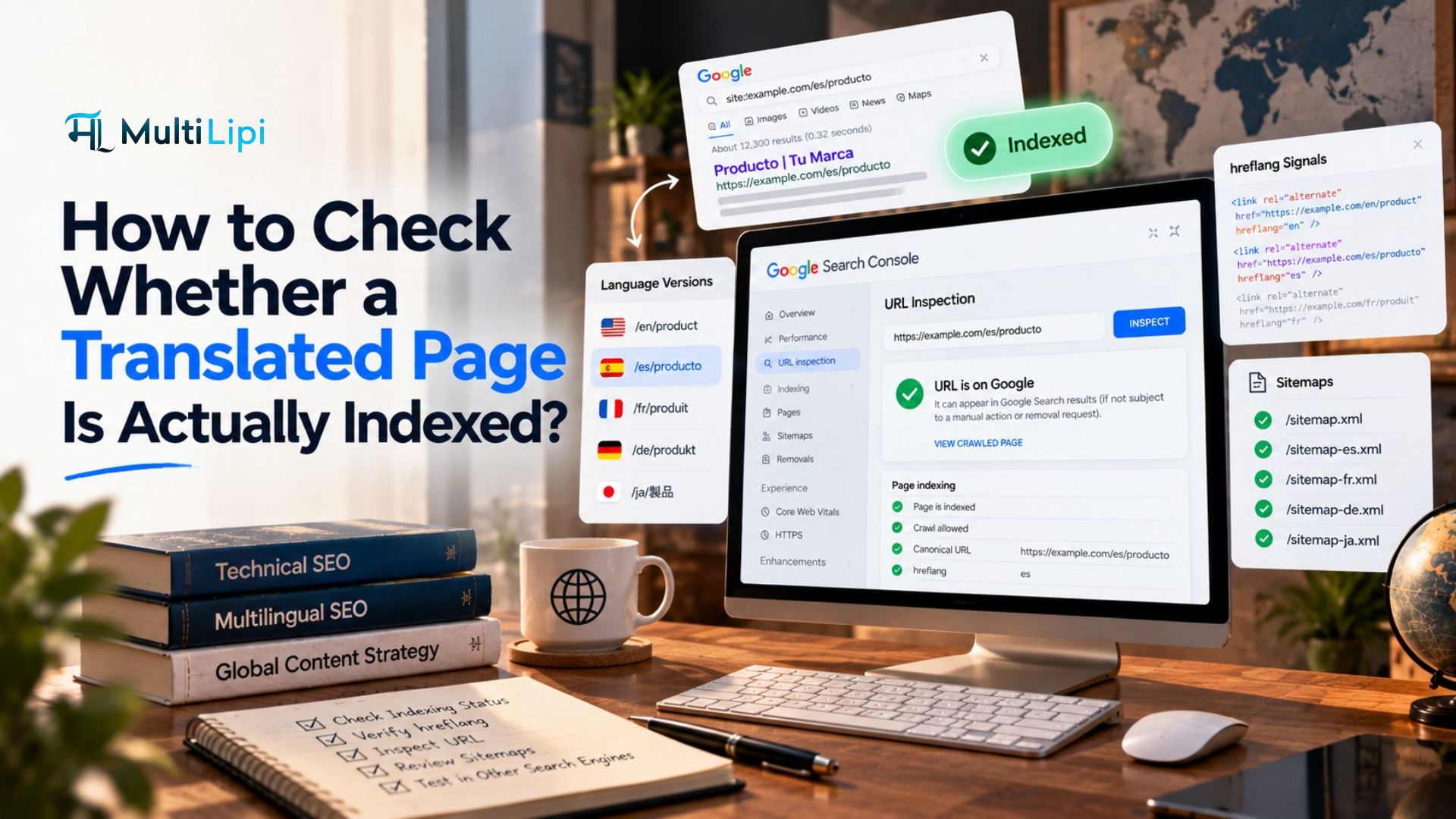
Validate international architecture with the Hreflang Checker and keep all language versions connected.
Entity consistency
Use multilingual SEO systems to preserve brand meaning, schema, and content intent across markets.
For a deeper explanation of why literal translation fails in AI discovery, review the translation vs localization guide.
Frequently Asked Questions
Will optimizing for AI search hurt my traditional Google rankings?
No. The core principles of GEO—fast pages, structured content, factual density, clean schema, and clear answers—usually strengthen traditional SEO as well.
How long does it take to see results in AI search?
AI crawlers update differently from Googlebot. Some real-time retrieval systems can surface improved content quickly, while broader model indexes may update in batches. The fastest gains usually come from BLUF content, clean schema, and updated llms.txt files.
Do backlinks still matter for AI search?
Yes, but authority quality matters more than raw volume. AI systems look for corroboration from trusted sources, not spammy directory links.
How can I track whether AI is citing my website?
Monitor server logs for AI user agents, track referral traffic from AI platforms, test brand-relevant prompts, and run the SEO Analyzer to detect technical blockers.
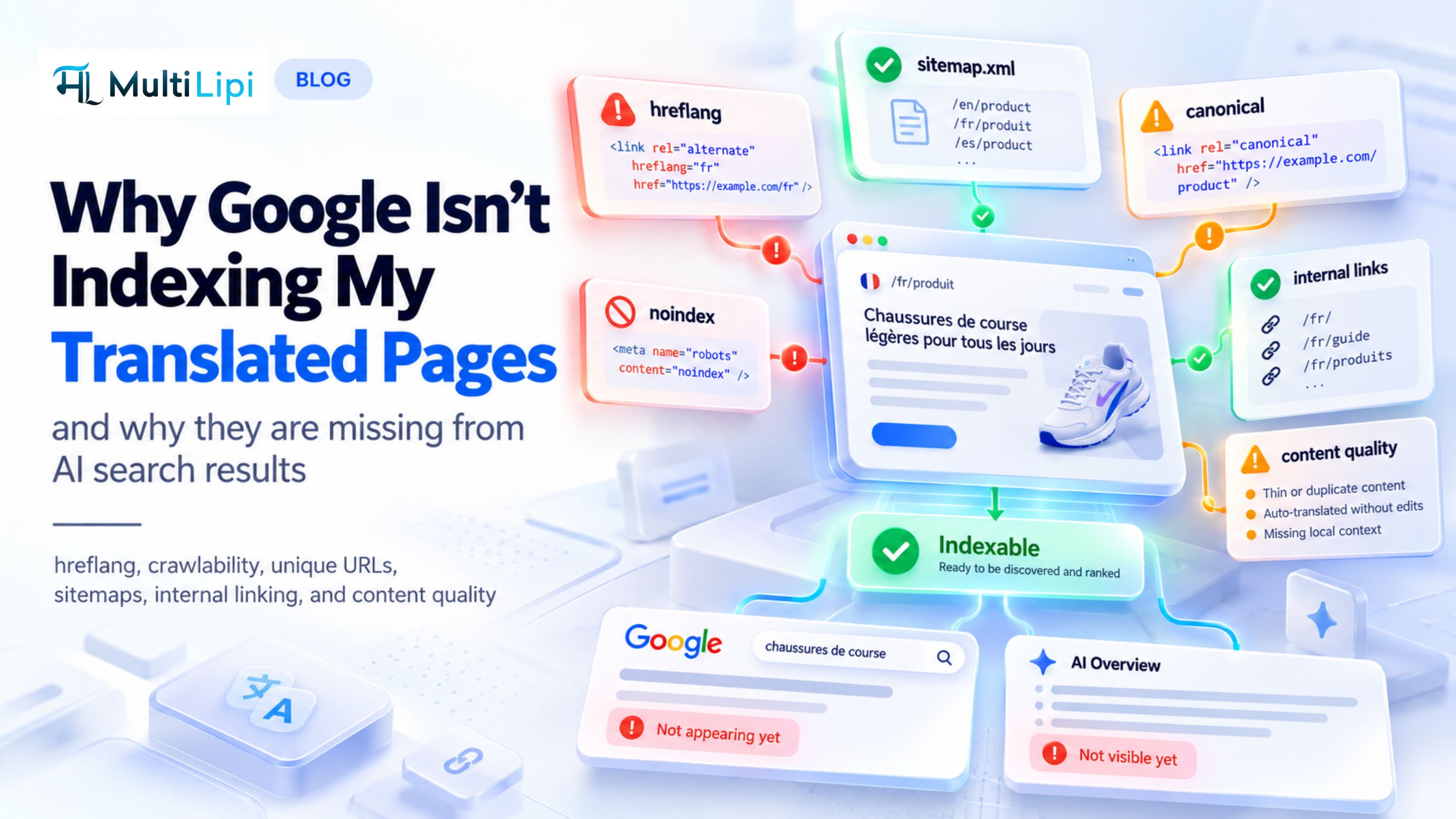
Why is my translated website losing AI visibility?
AI bots often skip client-side JavaScript and may only see the original page. Server-rendered localization is safer. See how this works in the Sulit.ph case study.
Your next step: build citation-ready infrastructure
Optimizing for AI-generated search results is an engineering challenge, not just a writing task. You need content structure, schema, token efficiency, localization, and technical SEO working together. MultiLipi helps teams translate, structure, and optimize websites for the reasoning economy.
Explore MultiLipi Pricing →