The Anxiety is Real
Traditional search engine volume is on track to decline by 25% by the end of 2026 as users flock to conversational AI chatbots. Organic CTR for queries with AI Overviews has plunged by a staggering 61%.
So, we must ask the multi-billion-dollar question: Is SEO Dead?
The digital marketing industry loves a good obituary. Since 2012, pundits have breathlessly proclaimed the "death of SEO" with the launch of every new algorithm, voice assistant, or social platform. But as we navigate through 2026, the anxiety echoing through boardrooms feels tangibly different. This is no longer a drill; the fundamental architecture of the internet is shifting.
We have officially entered the era of zero-click searches, where users' questions are satisfied directly on the results page by synthesized, machine-generated answers.
The Definitive Answer
No. Search Engine Optimization is not dead; it is simply undergoing a metamorphosis.
The strategies of keyword-stuffing and chasing "ten blue links" are obsolete, but the underlying technical infrastructure of SEO has never been more critical. SEO has evolved into the plumbing that powers .
Redefining the Search Lexicon
To understand why the old playbook is failing, we must first define the core entities that dictate modern visibility. The industry has fragmented into three distinct, yet deeply interconnected, disciplines:
The Three Pillars of Modern Search Visibility
SEO
The foundational practice of ensuring a website is technically sound, crawlable, and indexable by traditional search engine bots (like Googlebot). It focuses on matching user intent to web pages.
AEO
The practice of structuring on-page content (via FAQs, tables, and direct formatting) so that it can be extracted as a direct, zero-click answer in voice search, featured snippets, and AI summaries.
GEO
The strategic practice of optimizing a brand's entire digital footprint—using entity recognition, schema markup, and high information gain—so that LLMs like ChatGPT trust, retrieve, and cite the brand.
Critical Insight: You cannot skip directly to GEO without mastering SEO. AI models do not magically bypass the internet's infrastructure; they rely on it.
The Autopsy of Traditional Search: What Actually Died?
When people claim SEO is dead, what they are actually mourning is the death of "Lazy Search Marketing." The AI revolution of 2025 and 2026 systematically destroyed specific, outdated tactics.
The "Consensus Web"
"Look at the top three ranking articles, mash them together, and write something 10% longer."
Cause of Death: AI models already possess this generic, consensus knowledge in their pre-trained weights. If you publish an article that simply regurgitates known facts, your Information Gain Score is zero. Generative engines filter out this "semantic noise" and refuse to cite it.
The Dominance of the Blue Link
"Ranking #1 guarantees traffic"
Cause of Death: With AI Overviews and chat interfaces taking up the majority of the viewport, the traditional SERP has been pushed below the fold. However, 92% of top-performing marketers are maintaining or increasing their SEO budgets because AI-referred traffic converts at incredibly high margins.
What Survived: While click volume is lower, the intent of the remaining clicks is vastly higher. HubSpot's 2026 State of Marketing report found that top-performing marketers are increasing SEO budgets specifically because AI-referred traffic converts at incredibly high margins.
Why Traditional SEO is the Engine of AI Search
The biggest misconception among modern executives is that they can abandon technical SEO and pivot entirely to "AI Marketing." This is a fatal structural error.
How AI Models Actually Work: The RAG Pipeline
Large Language Models do not possess infinite real-time knowledge. When a B2B buyer asks ChatGPT or Google Gemini to compare software vendors, the AI utilizes Retrieval-Augmented Generation (RAG). It deploys a web crawler to scan the live internet, fetch the most relevant data, and pull that data back into its context window to generate a factual answer.
If your robots.txt is misconfigured, or your site architecture is a mess of broken redirects, AI crawlers like OAI-SearchBot or ClaudeBot simply cannot access your data.
A study by Ahrefs highlighted that 76.1% of URLs cited in Google AI Overviews also rank in the top 10 traditional Google search results. If you are not indexed and ranked by the traditional search engine, the AI model will not find you during its real-time retrieval phase.
Without a clean HTML hierarchy (H1, H2, H3), an AI model cannot easily "chunk" your text to extract facts.
In 2026, Technical SEO is no longer about pleasing an algorithm to win a rank; it is about reducing the "computational cost" for an AI to read your website.
You can audit your site's machine-readability right now using our .
The New Structure: The Digital Visibility Hierarchy of Needs
To stop the repetitive cycle of chasing algorithms, brands must adopt a new structural framework. Think of modern visibility as a pyramid. You cannot reach the peak of AI citations without building the base.
The Visibility Pyramid
Layer 1: The Technical Foundation (Traditional SEO)
This is the bedrock. It includes site speed (Core Web Vitals), mobile responsiveness, secure connections (HTTPS), and pristine XML sitemaps. For global brands, this layer is exponentially more complex.
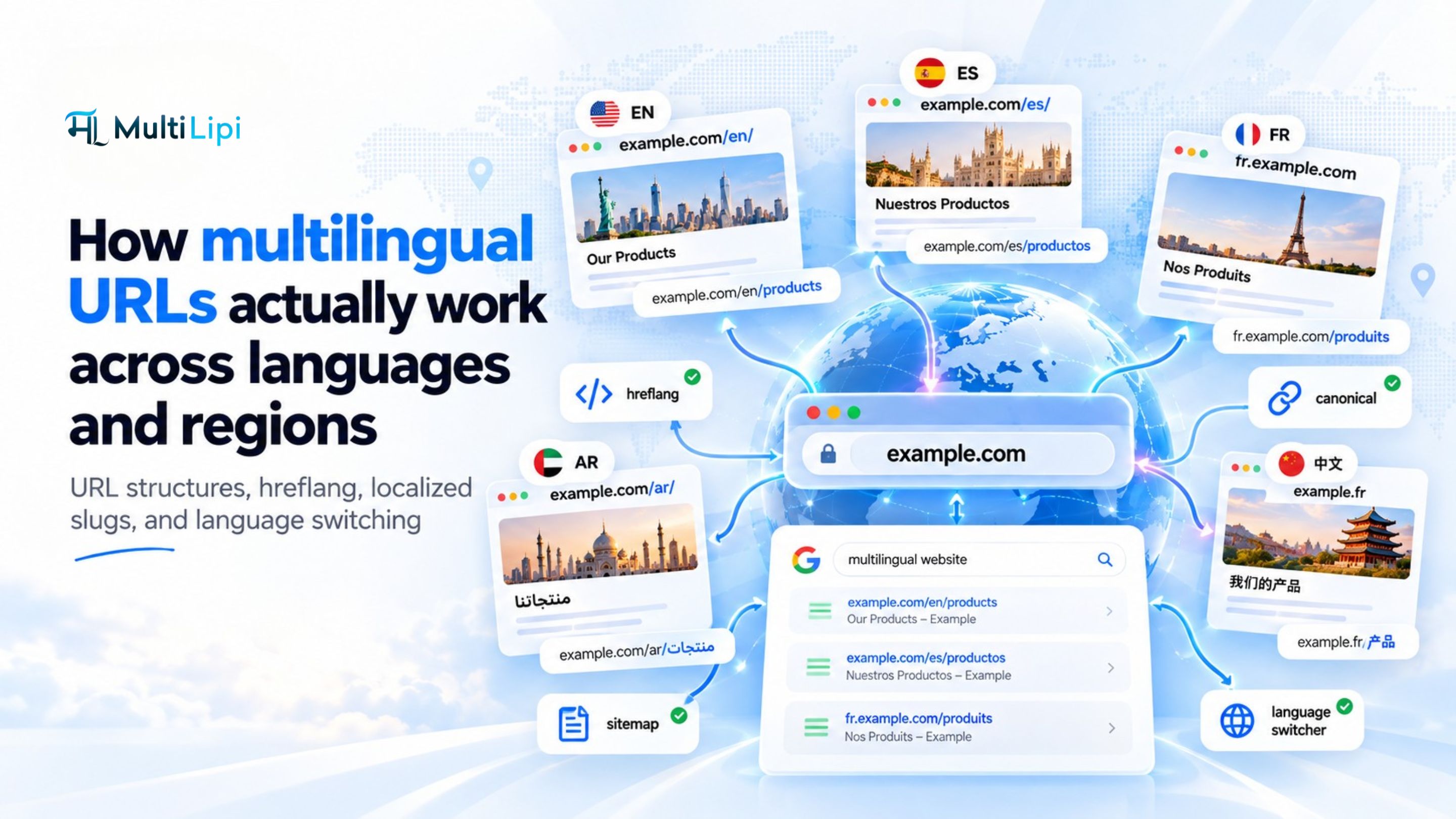
It requires flawless international URL structures and perfectly reciprocal hreflang tags. If your US English page doesn't correctly point to your Mexican Spanish page, search engines and AI models experience "Context Collapse" and ignore both. You can instantly verify your global architecture using our .
Layer 2: The Data Layer (AEO & Machine Readability)
Once the bots can access your site, they need to understand it instantly. This layer requires transitioning from unstructured narrative text to highly structured data.
Layer 3: The Citation Layer (GEO & Information Gain)
The peak of the pyramid is where you earn the recommendation. AI models prioritize content that features original data, expert quotes, proprietary case studies, and clear, bold stances.
Content structured with the BLUF (Bottom Line Up Front) methodology—where the direct answer is placed immediately under the heading—wins the citation battle. For a deep dive into structuring this content, consult our .
The Multilingual Multiplier: Why Global SEO is the Ultimate GEO Hack
If there is one area where the "SEO is dead" narrative is most dangerously wrong, it is in international markets.
The Translate-Train Bias
Modern AI models are inherently multilingual. When a user in Japan queries ChatGPT in Japanese, the model synthesizes answers from across its global training data.
If a SaaS company relies solely on its English website and ignores Multilingual SEO, it is handing its international market share directly to local competitors.
Learn more about the critical differences in our and explore the full .
Case Study: How Sulit.ph Proved SEO is Alive
Real Results from Traditional SEO
Consider the reality of dynamic marketplaces. Sulit.ph, a leading marketplace, faced a massive visibility gap in cross-border e-commerce. They didn't chase abstract AI theories; they doubled down on foundational Multilingual SEO.
The Strategy:
- Integrated MultiLipi's server-side rendering infrastructure
- Launched 9 language variations (Korean, Malay, Hindi, and more)
- Automated hreflang injections and localized URL slugs
By doing the hard work of traditional SEO across multiple languages, Sulit.ph built a massive, structured data feed. Now, when an AI agent searches for products in the ASEAN region, Sulit.ph is the definitive, cited authority because their technical foundation is flawless. You can read the full breakdown of their strategy in our .
Your "Post-SEO" Action Plan
The era of driving cheap, low-intent clicks is over. The era of building authoritative, citable, and machine-readable brand entities has begun. To adapt to the hybrid search landscape, marketing leaders must execute the following parallel optimization strategy:
Stop Tracking Vanity Metrics
Retire "average keyword position" and total organic impressions. Begin tracking your Reference Rate and Share of Model—how often your brand is cited by ChatGPT and Perplexity compared to your competitors.
Audit Your Fact Density
Use our to strip away your marketing adjectives. Do your cornerstone pages actually provide unique, net-new statistics or insights? If not, rewrite them for Information Gain.
Deploy an llms.txt File
Establish your AI crawler governance immediately. Guide models like OAI-SearchBot to your cleanest, most authoritative pages to ensure they ground their answers in your truth, not a competitor's hallucination.
Localize at the Code Level
Do not rely on browser-based translation widgets that search engines cannot crawl. Ensure your international content is fully indexable with translated metadata and localized URL slugs.
The Confident Solution: Enter the Authority Architect
To answer the initial question: SEO is not dead. It has matured.
It has shed its spammy, manipulative past and become the critical engineering layer for artificial intelligence.
The 25% drop in traditional search traffic is a cleansing fire. It is filtering out the brands that relied on generic content and rewarding the organizations that are willing to build true, verifiable authority.
You no longer need to be a traditional SEO expert to win this new landscape, but you do need the right infrastructure to architect authority across AI platforms globally.
Ready to Architect Your Authority?
MultiLipi has evolved from a translation tool into the world's first Multilingual LLM Optimization platform. We handle the technical SEO, the hreflang mapping, the schema generation, and the AI-readability formatting across 120+ languages simultaneously.