The Myths Holding Your Business Back
Expanding your website to multiple languages is a powerful way to reach new customers—yet many businesses hesitate due to misconceptions about cost, complexity, and effectiveness.
The reality? Most fears about multilingual SEO are based on outdated information or misunderstanding how modern localization platforms work. With 75% of internet users speaking languages other than English, and international markets growing faster than domestic ones, staying monolingual means leaving massive revenue opportunities on the table.
In this guide, we'll debunk the five most common myths that prevent businesses from capturing global market share through multilingual SEO. The truth might surprise you—and unlock significant growth opportunities you've been overlooking.
The Multilingual Opportunity by the Numbers
72% Prefer Native Language, 120+ Markets Available
72% of multilingual buyers prefer purchasing in their native language across 120+ available markets.
Myth #1: "Multilingual SEO is Too Expensive for My Business"
This is perhaps the most persistent myth—and the easiest to debunk with data. Many business owners imagine they'll need to hire native-speaking copywriters for dozens of languages, maintain separate teams for each market, and invest hundreds of thousands in translation costs before seeing any return.
The Reality: ROI Often Exceeds Domestic Markets
Modern multilingual SEO platforms have dramatically reduced implementation costs. What used to require $50,000-$100,000+ in upfront investment can now be launched for a fraction of that cost—often with immediate positive ROI. Companies using platforms like MultiLipi typically see:
- 47% average revenue increase within 6-12 months of launching multilingual sites
- 3.2x faster growth in international markets compared to domestic saturated markets
- Lower customer acquisition costs in less competitive international markets
- Payback periods of 3-6 months for properly implemented multilingual strategies
✅Real-World ROI Example
A SaaS company with $2M ARR invested $15,000 in multilingual SEO across 5 European languages. Within 8 months, they added $380,000 in new revenue from these markets—a 25x return on their initial investment.
The key insight: they weren't splitting their domestic market—they were accessing entirely new customer pools who would never have found them otherwise.
The cost myth persists because businesses compare multilingual investment to their total marketing budget rather than to the incremental revenue opportunity. When you frame it correctly—cost per new market accessed—the economics become compelling. You're not spending more to reach the same audience; you're spending incrementally to access massive new audiences.
Myth #2: "Machine Translation Quality is Too Poor for SEO"
A decade ago, this was absolutely true. Machine translation produced awkward, sometimes incomprehensible text that would have destroyed your brand credibility. But dismissing machine translation in 2026 based on 2015 technology is like refusing to use smartphones because early mobile phones had poor battery life.
The Reality: Neural MT + Human Review = Publication Quality
Modern neural machine translation (NMT) has achieved near-human parity for many language pairs, particularly for technical and business content. Systems like GPT-4, Google's Neural MT, and DeepL can produce translations that are 85-95% accurate out of the box, with the remaining 5-15% easily addressed through targeted human review.
The game-changing shift is the hybrid model: machine translation for speed and scale, combined with human expert review for quality and cultural nuance. This approach delivers 95%+ of pure human translation quality at 20-30% of the cost and 10x the speed. For SEO purposes, where content volume and freshness matter significantly, this is often superior to slower pure-human translation.
Translation Approach Comparison
Pure Machine Translation
Hybrid Model (MT + Human)
The key is understanding that "machine translation" in 2026 doesn't mean raw, unedited MT output. It means using AI as a powerful first draft that human experts then refine. This is exactly how professional translators now work—they use MT to accelerate their workflow, not replace their expertise.
For SEO specifically, the hybrid model excels because it allows you to maintain content freshness across all languages. When you update your English content, those updates can be reflected in 20+ languages within days rather than months. This velocity is impossible with traditional human-only translation and critical for maintaining SEO competitiveness.
Myth #3: "Multiple Language Versions Will Hurt My SEO Rankings"
This myth stems from legitimate historical concerns about duplicate content penalties. Business owners worry that having the same content in multiple languages will trigger Google's duplicate content filters and damage their rankings. The concern is understandable but fundamentally misplaced when you understand how search engines handle multilingual content.
The Reality: Proper Implementation Enhances SEO
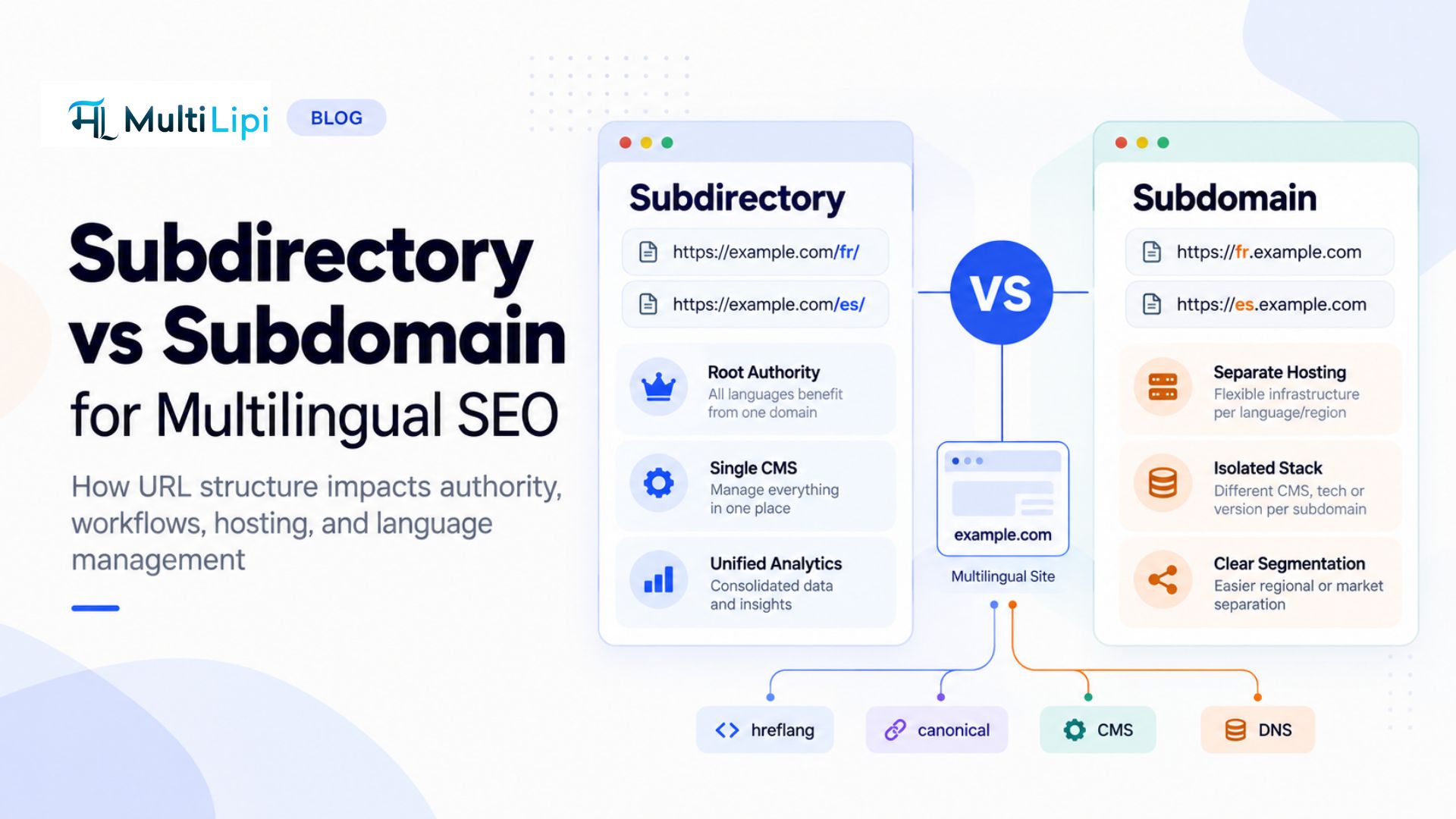
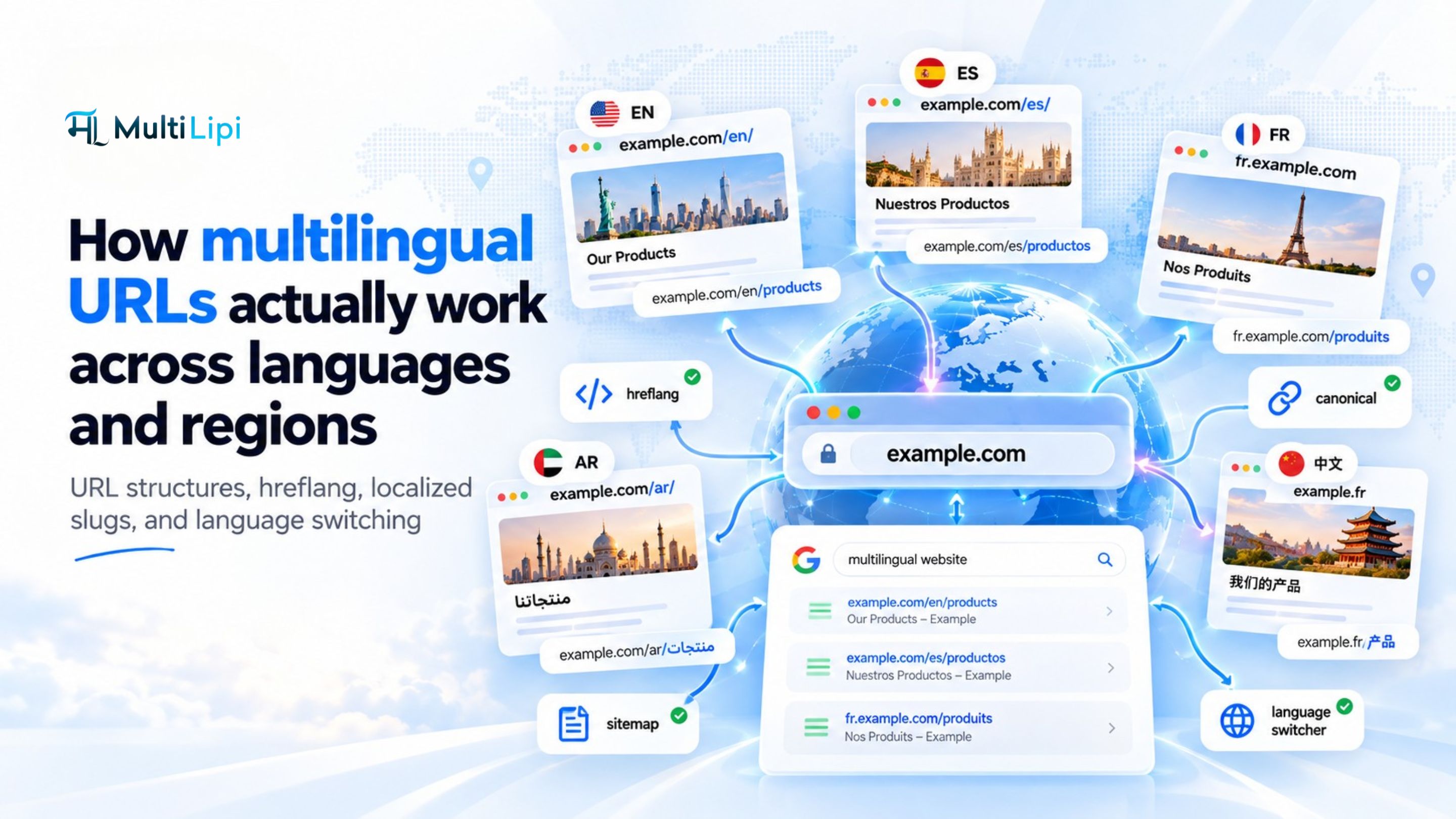
Google explicitly encourages multilingual content and has built sophisticated systems to handle it correctly. The key is proper technical implementation—specifically, hreflang tags and language-specific URL structures. When implemented correctly, multilingual content doesn't compete with itself; instead, each language version ranks independently in its target market.
Hreflang tags tell search engines, "This is the German version of this content for German users, and this is the Spanish version for Spanish users." Search engines then show each version only to the appropriate audience. Your German content doesn't compete with your English content because they're targeting completely different user segments.
💡SEO Enhancement Through Multilingual
Expanded Reach: Each language opens access to new keyword opportunities with lower competition
Domain Authority Transfer: Properly linked multilingual sites share authority signals across language versions
Local Backlinks: International content attracts backlinks from regional sites, boosting overall domain authority
User Experience: Native language content reduces bounce rate and increases engagement metrics
In fact, multilingual sites often see SEO improvements in their original language as well. Why? Because international backlinks, increased brand authority, and better user engagement signals all contribute to domain-wide SEO strength. Your French site earning backlinks from French publications enhances your overall domain authority, benefiting all language versions.
The real risk isn't implementing multilingual SEO—it's implementing it incorrectly. Poor hreflang implementation, mixing languages on the same URL, or failing to provide complete translations can create issues. But these are entirely avoidable with proper technical implementation and modern platforms that automate the complex technical elements.
Myth #4: "My Customers Speak English, So I Don't Need Other Languages"
This is perhaps the most dangerous myth because it sounds reasonable on the surface. Many business owners in English-speaking markets assume that international buyers who want their products will simply use English. After all, English is the global business language, right?
The Reality: 72% of Buyers Prefer Native Language Content
Research consistently shows that even among multilingual buyers who can understand English, 72% prefer to make purchasing decisions in their native language. This isn't about capability—it's about trust, comfort, and comprehension depth.
Consider the buying journey. A German executive might read English perfectly well for business communication, but when researching a complex B2B software purchase involving $50,000+ annual spend, they want to evaluate options in German. They want to see case studies from German companies, understand pricing in Euros, and feel confident they fully understand the terms and conditions. English content creates friction; native language content removes it.
Conversion Rate Lift
Companies see 47% higher conversion rates from native language visitors vs. English-only content.
Average Order Value
Native language content increases AOV by 32% due to higher trust and comprehension.
Market Penetration
Access 75% of global internet users who prefer non-English content for purchasing decisions.
Competitive Advantage
Most competitors stay English-only, leaving massive opportunities in international markets.
Beyond preference, there's the search behavior reality. When people search in German, Google shows German-language results first. Your English site might rank well for English queries, but it's invisible for German searches—even if the searcher could theoretically read English. You're simply not in the consideration set.
The "everyone speaks English" myth also ignores growth markets. The fastest-growing internet populations are in Asia, Latin America, and Africa—regions where English proficiency is limited but purchasing power is exploding. Staying English-only means missing the highest-growth markets entirely.
Myth #5: "Managing Multiple Languages is Too Complex"
The final myth focuses on operational complexity. Business owners imagine they'll need to manually manage content updates across dozens of languages, coordinate with translators in different time zones, and constantly check for inconsistencies and errors. For a decade ago, this was a legitimate concern.
The Reality: Modern Platforms Automate Complexity
The game-changer is modern multilingual management platforms that handle the complexity for you. When you update content in your primary language, the system automatically:
- Identifies what's changed and needs re-translation
- Translates updates using AI with optional human review queues
- Updates all language versions simultaneously
- Maintains schema markup and hreflang tags automatically
- Ensures brand term consistency across all languages
- Provides quality monitoring and error detection
With platforms like MultiLipi, the operational burden of managing 5 languages versus 50 languages is nearly identical. The system handles the complexity, routing, quality assurance, and technical implementation. You manage your content once in your primary language; the platform ensures accuracy and consistency across all target languages.
✅MultiLipi: Complexity Solved
MultiLipi was built specifically to eliminate multilingual complexity. Our platform handles 120+ languages with automated workflow management, AI-powered translation with human expert review, automatic hreflang implementation, and one-click content synchronization across all languages.
The complexity concern also overestimates how often content actually changes. Most business websites have stable core content (product descriptions, company information, key landing pages) that updates infrequently. Blog content and news updates might be more dynamic, but modern platforms handle this seamlessly through workflow automation.
The Truth: Multilingual SEO is a Competitive Advantage
Every myth we've debunked reveals the same underlying truth: multilingual SEO is not the risky, expensive, complex endeavor it once was. Modern technology, platforms, and best practices have made it accessible, affordable, and highly effective for businesses of all sizes.
The real risk isn't implementing multilingual SEO—it's staying monolingual while competitors capture international market share. With 75% of internet users preferring non-English content and international markets growing 3x faster than domestic ones, the opportunity cost of inaction is enormous.
The question isn't "Can we afford multilingual SEO?" It's "Can we afford not to?" In an increasingly global digital marketplace, multilingual presence isn't optional—it's essential for sustainable growth.